Society Founded on Natural Law & Moral Autonomy
What if the foundations of society weren’t built on control, coercion, and policy — but on natural law, moral autonomy, and the inherent rights recognised in the original Magna Carta 1215?
What if government wasn’t something imposed over us — but a temporary stewardship, grounded in service to life, conscience, and trust?
Too often, visions like this are dismissed in the collective conscience as naïve or idealistic. But what fuels that cynicism?
At its root is an anxiety — not just about change, but about what must be relinquished if the truth of reality were widely accepted.
Because the moment people recognise that truth is not relative, that conscience is non-transferable, and that no being has authority over another, the entire architecture of coercive power begins to collapse.
What we’ve been conditioned to call “authority” is, in truth, an illusion — a manufactured construct that serves those who fear what would emerge if each soul stood fully in moral responsibility. There is no such thing as legitimate external authority. Only actions: some that uphold freedom, and others that violate it.
When relationships are grounded in moral alignment, the impulse to dominate dissolves — along with the need to disguise that domination behind the myth that punitive force is necessary for social cohesion. Coherence arises through mutual recognition of what is true — not through the imposition of one will upon another.
So, who stands to lose if the truth of reality is remembered?
- Those who rule through fear and force, whose legitimacy depends on the belief that obedience is necessary for order.
- Institutions that harvest human compliance through policy, taxation, and manufactured dependency, all under the pretext of public good.
- Psychological identities built on outsourcing moral responsibility — those who find safety in submission and purpose in compliance.
- Industries of punishment and profit — surveillance, incarceration, warfare, and regulation — all of which depend on extinguishing the sacred right to withdraw consent.
Cynicism functions as a psychic defence — a shield against the terror of facing how deeply we’ve invested in a false agreement. It masks the pain of betrayal by pre-emptively mocking any alternative.
But this ridicule is not insight. It is resistance — the resistance of a system that knows its survival depends on suppressing the truth of natural order.
What’s truly naïve is believing that domination can deliver peace, or that integrity can be administered from the top down.
The return to natural law is not a utopian fantasy. It is a moral and spiritual necessity — a remembering of the living structure of reality, where justice is not enforced but embodied, and legitimacy is measured by alignment with truth.

Five Core Shifts from Coercion to Moral Order
To understand what a society grounded in natural law might look like, we must contrast it with the current model — one rooted in control, not conscience.
Here are five key transformations:
1. From Policy to Conscience-Led Agreements
Modern policy replaces moral discernment with mechanical obedience. It seeks uniformity, not understanding.
In a natural law-aligned society:
- There would be no top-down policy. Agreements would arise from deliberation rooted in shared principles, not imposition.
- Individuals would retain the full right to withhold consent from anything that violates their conscience.
- Prescriptive rules would be replaced by context-sensitive discernment.
2. From Enforcement to Restorative Accountability
Today’s enforcement culture is about submission to external rules. Natural law centres on repair of harm and restoration of integrity.
- Institutions would act as custodians, not commanders.
- Conflict resolution would be relational and participatory, grounded in trial by jury — not procedural punishment.
- Accountability would extend to the community, whose culture, neglect, or complicity may have contributed to harm.
Justice does not fracture. It does not compel compliance through fraud or force. It is not punitive, but rooted in the principle of sacred reciprocity — a relational process that seeks to restore wholeness. Justice, grounded in the unseen forces of cause and effect, recognises that the wellbeing of the individual and the integrity of the community are inseparable. In moments of rupture, it calls the community into deeper responsibility, not into cycles of retribution.
In this light, trial by jury is not a bureaucratic performance, but a soul-centred tribunal — one that draws its legitimacy from the shared conscience of those present, and its authority from alignment with truth, not with organised punitive force.

3. From Representation to Direct Moral Responsibility
In the present system, conscience is outsourced to representatives. This creates a vacuum in which moral evasion flourishes.
Under natural law:
- No one would have authority to act “on behalf” of others in ways that override their conscience.
- Councils of peers, selected by consent and recallable at any time, would coordinate logistics — not rule.
- Responsibility would remain with the individual, untransferable and sacred.
4. From Monopoly on Force to Voluntary Participation
The modern state defines itself by its monopoly on violence. That alone should reveal its divergence from natural order.
In right alignment:
- All participation would be voluntary, not compulsory.
- Positions of responsibility would be conditional on ongoing trust and consent.
- Any structure requiring force to sustain itself would be recognised as self-invalidating.
5. Clause 61 and the Sacred Right of Withdrawal
Clause 61 of Magna Carta 1215 enshrines the right to resist institutions that break their oath to serve.
It affirms:
- Trust must be earned and is revocable.
- The people are not subjects of power, but guardians of their own sovereignty.
- When service to life is abandoned, disobedience becomes not only lawful — but morally essential.
This clause doesn’t invite chaos — it calls for restoration of the original moral agreement that binds all public service to conscience and consent.
In Essence
If institutions were in right relationship with those they claim to serve:
- There would be no policy imposed, only decisions arising through mutual recognition and moral coherence.
- Justice would be soul-based and participatory, not punitive and administrative.
- Institutions would be temporary, transparent, and voluntary — not ruling bodies but stewards of shared wellbeing.
No seduction of punitive force. No fear of freedom. Just the living responsibility of each soul to act in alignment with self-evident truth, accountable to the moral structure that governs all life without exception.

Take the Next Step: Reclaim Moral Sovereignty with These Core Resources
Deepen your understanding of natural law and lawful self governance through these essential tools:
- “A Brief Definition of Natural Law” — A foundational overview of the universal moral principles that govern reality, revealing why conscience is sovereign and external authority is an illusion.
- “Magna Carta 1215 Article 61 With Explanations” by David Robinson — A plain-language breakdown of the Charter’s security clause, showing how lawful remedy is already built into our constitutional heritage.
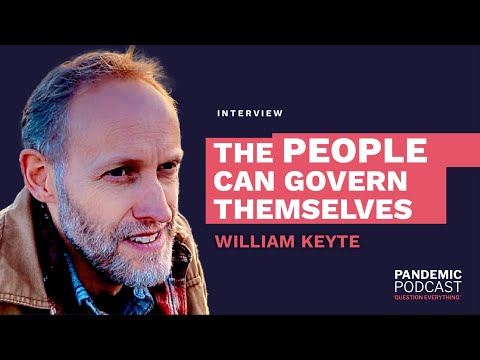
- “The People Have The Power” — Interview with William Keyte — A powerful conversation hosted by Dan Astin-Gregory, exposing how our true constitutional framework provides the practical tools for withdrawing consent and restoring sovereignty.